Ubud Areas and Surroundings: A Practical Guide for Long-Term Living
Ubud Areas And Surroundings Guide
Ubud Areas by Location
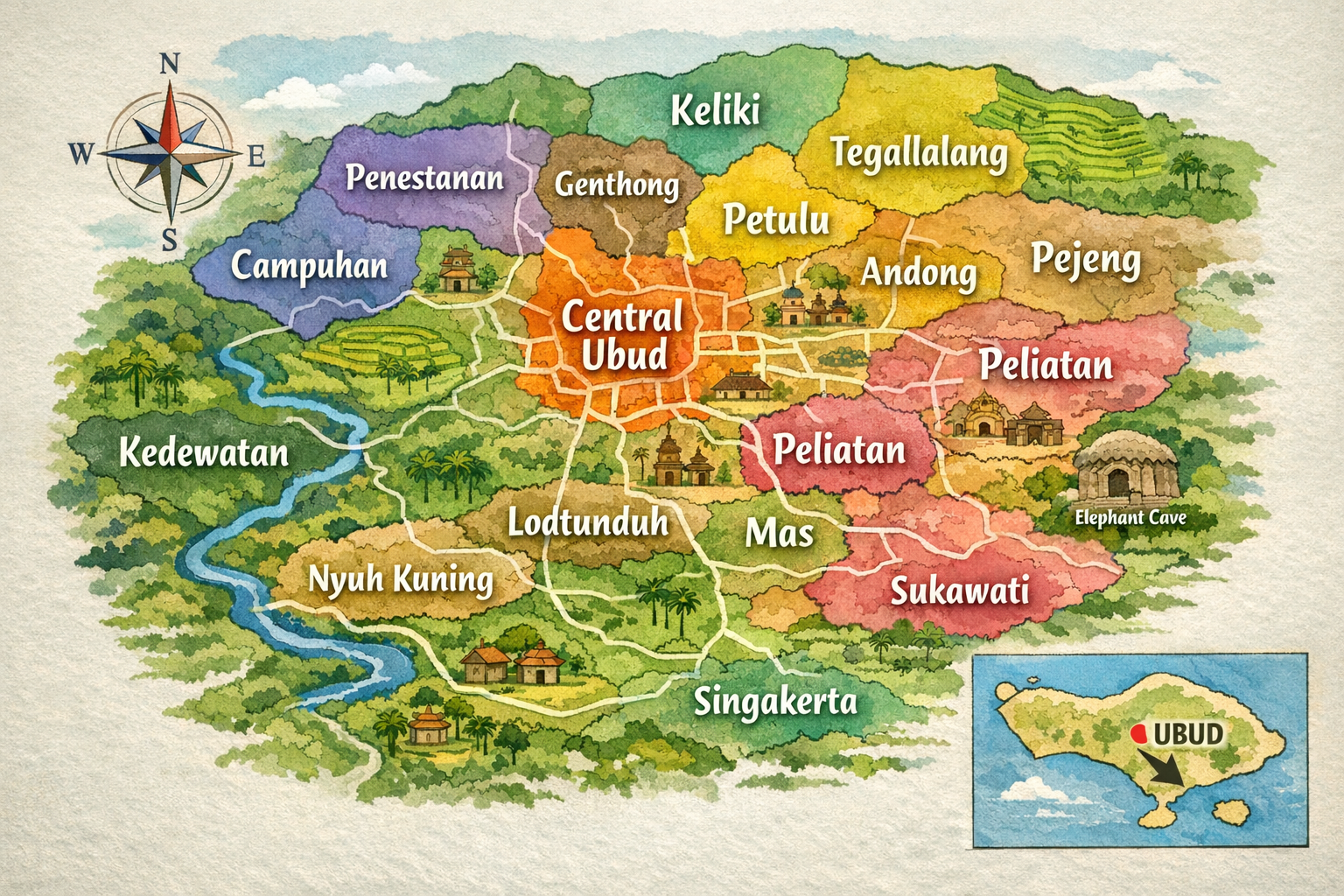
Below is a geographic overview of Ubud and nearby areas, grouped by direction relative to Central Ubud. This helps to quickly understand how the region is structured for long-term living.
North of Ubud
South of Ubud
West of Ubud
East of Ubud
Central Ubud
Central Ubud (Ubud Palace, Monkey Forest area, main streets)
Area guides with current rental listings
These Ubud neighborhoods have dedicated guides linked to villas we list in our catalog. Each page covers daily life, trade-offs, and FAQ—then points you to rentals in that sub-area.
Lodtunduh — space, gardens, family-friendly long-term villas
Penestanan — walkable, creative, social-by-Ubud-standards living
Mas — craft-village calm, rice-field edges, strong value pockets
Gentong — greener residential lanes north-east of town
Petulu — quiet village life and heron-country atmosphere
Kedewatan — breezy ridges and valley-edge outlooks
Sayan — Ayung valley calm and iconic views
Tegallalang — terraces, scenery, immersion-first living
Keliki — open landscapes and slower village pace
Kemenuh — practical residential countryside
Sukawati — local markets, value, and space east of Ubud
Areas such as Pejeng, Nyuh Kuning, Andong, and central Ubud are covered in the sections below. We add catalog-linked guides when we list villas in those pockets.
Ubud Areas and Surroundings: A Practical Guide for Long-Term Living
Ubud is not just a town, but a collection of very different neighborhoods, each with its own atmosphere, lifestyle, and level of infrastructure. Some areas are vibrant and social, others are quiet, green, and ideal for slow living. This guide focuses on long-term living, helping you understand where each area truly shines.
Central Ubud
Central Ubud is the cultural and social heart of the area. It offers the highest density of cafes, restaurants, yoga studios, shops, and services. Life here is active, walkable, and convenient, but also the busiest. Everything is close enough to walk or use taxi scooters, without relying on a personal scooter.
Why it is good for long-term living: Ideal for those who want to live without a motorbike, enjoy social life, and have everything within walking distance.
Supermarkets: Coco Supermarket (central), Cocomart near Monkey Forest.
Schools and kindergartens: Several small kindergartens and learning centers nearby; international schools are reachable within 10–20 minutes.
Penestanan
Penestanan is one of the most creative and atmospheric areas of Ubud. Known for its artistic community, yoga culture, and iconic cafes like Alchemy, Zest, and Vespa, it has a very distinct identity.
Why it is good for long-term living: A strong community feel, walkable paths, creative energy, and a unique lifestyle that attracts artists, yogis, and long-term expats.
Supermarkets: Bintang Supermarket nearby; Pepito Tebongkang within short driving distance.
Schools and kindergartens: Small alternative schools and kindergartens nearby; larger schools are within a 15–20 minute drive.
Campuhan
Campuhan sits between Central Ubud and the western river valleys. It is famous for the Campuhan Ridge Walk and offers a balance between nature and accessibility.
Why it is good for long-term living: Green surroundings, beautiful walking routes, and close proximity to Central Ubud without being directly inside the busy zone.
Supermarkets: Bintang Supermarket and Coco Supermarket within easy reach.
Schools and kindergartens: Kindergartens nearby; international schools accessible within 15–20 minutes.
Sayan
Sayan is one of the most prestigious residential areas in Ubud. It is known for river views, luxury villas, and a calm, refined atmosphere. Despite its quiet nature, infrastructure has improved significantly.
Why it is good for long-term living: Privacy, nature, beautiful landscapes, and a high-quality living environment while staying close to Ubud.
Supermarkets: Pepito Sayan area; additional large supermarket directly opposite; CocoMart Sayan available.
Schools and kindergartens: Several international schools and kindergartens within 15–25 minutes by car.
Kedewatan
Kedewatan is a green and spacious area north-west of Ubud. It combines rivers, rice fields, and fast access to northern Bali routes.
Why it is good for long-term living: Quiet environment, larger land plots, and good road access while still being close to town.
Supermarkets: Pepito Kedewatan (large and modern), local minimarts.
Schools and kindergartens: Schools and kindergartens reachable within 15–25 minutes.
Tegallalang
Tegallalang is located north of Ubud and is best known for its rice terraces and proximity to the highlands. From a long-term living perspective, this area suits a very specific lifestyle choice rather than general residential convenience.
Why it is good for long-term living: Tegallalang is suitable for people who intentionally want to live in a remote village environment, explore traditional Balinese daily life, and stay close to nature. It offers quick access to water sources, rice terraces, jungle landscapes, and the road toward Kintamani. It is more about immersion and solitude than comfort.
Supermarkets: There are no large or well-equipped supermarkets in Tegallalang. Pepito Andong and Delta Dewata are reachable only by car or scooter and require a longer drive.
Schools and kindergartens: There are no international schools or well-known kindergartens in Tegallalang. Access to schools requires commuting to other areas.
Keliki
Keliki is a quiet village area north-west of Ubud, positioned between Kedewatan and the northern highlands. It is known for its fresh air, open landscapes, and very calm rural atmosphere.
Why it is good for long-term living: Keliki suits people who deliberately want a village lifestyle with minimal infrastructure. It is a great place to slow down, breathe cleaner air, and live close to nature. Parts of Keliki are close to walking routes connected to the Campuhan and Artist Trail area, making it pleasant for long walks surrounded by greenery. This area is not about convenience, but about space, silence, and immersion.
Supermarkets: There are no large supermarkets in Keliki. Pepito Andong or Pepito Kedewatan are reachable only by car or scooter.
Schools and kindergartens: There are no international schools or well-known kindergartens in Keliki. Access to schools requires commuting to other areas.
Petulu
Petulu is a peaceful residential area north of Ubud, well known for its greenery and calm village life. It has become increasingly popular for long-term rentals.
Why it is good for long-term living: Quiet atmosphere, good balance between nature and access to Ubud, suitable for families and remote workers.
Supermarkets: Pepito Andong nearby; Delta Dewata supermarket just a few minutes away; local minimarts in the area.
Schools and kindergartens: Close to several international and alternative schools, including family-oriented education centers.
Gentong
Gentong is a lesser-known but very scenic area north-east of Ubud. It benefits from its proximity to the road leading to Tegallalang and Kintamani.
Why it is good for long-term living: Fresh air, beautiful landscapes, and strategic access to northern Bali while remaining close to Ubud.
Supermarkets: Pepito Andong within short driving distance; Delta Dewata supermarket nearby; local shops available.
Schools and kindergartens: Schools accessible within 15–30 minutes.
Andong
Andong is one of the most practical residential areas in Ubud. It has strong infrastructure and is popular among long-term residents.
Why it is good for long-term living: Convenience, flat roads, and easy access to supermarkets and services.
Supermarkets: Pepito Andong (one of the largest in Ubud); Delta Dewata supermarket just minutes away; CocoMart and minimarts.
Schools and kindergartens: Several international schools and kindergartens nearby, including well-known education centers.
Peliatan
Peliatan lies east of Central Ubud and blends local Balinese life with growing residential development.
Why it is good for long-term living: More authentic local atmosphere with quick access to Central Ubud and schools.
Supermarkets: Pepito Peliatan; CocoMart; local markets.
Schools and kindergartens: Close to Empathy School and other family-oriented schools.
Pejeng
Pejeng is one of the greenest and most spacious areas east of Ubud. It is famous for its rice fields, temples, and open landscapes.
Why it is good for long-term living: Space, privacy, and strong connection to nature, ideal for those who want calm surroundings.
Supermarkets: Pepito Andong reachable by car or scooter; Delta Dewata supermarket also reachable; local village shops.
Schools and kindergartens: Schools available within 20–30 minutes, including international options.
Nyuh Kuning
Nyuh Kuning is a village south of the Monkey Forest, known for its community feel and quieter streets.
Why it is good for long-term living: Village atmosphere with walking access to Central Ubud and green surroundings.
Supermarkets: CocoMart nearby; Pepito Tebongkang within short drive.
Schools and kindergartens: Several kindergartens and learning centers nearby.
Lodtunduh
Lodtunduh is located south of Ubud and is popular for long-term family living due to its space and affordability.
Why it is good for long-term living: More space, calmer roads, and better value for long-term rentals.
Supermarkets: Pepito Lodtunduh; local minimarts.
Schools and kindergartens: Close to Varvara School and other international schools.
Mas
Mas is famous for its wood carving tradition and lies south-east of Ubud.
Why it is good for long-term living: Cultural environment, quieter life, and reasonable rental prices.
Supermarkets: Pepito Peliatan; local markets.
Schools and kindergartens: Schools reachable within 15–25 minutes.
Singakerta
Singakerta is a growing residential area south-west of Ubud.
Why it is good for long-term living: New villas, calmer lifestyle, and good access to southern Bali.
Supermarkets: Pepito Tebongkang; CocoMart.
Schools and kindergartens: Schools and kindergartens accessible within short driving distance.
Sukawati
Sukawati is located east of Ubud and is well known for its art market and local community.
Why it is good for long-term living: More affordable housing, local atmosphere, and larger land plots.
Supermarkets: Local markets; Pepito Andong reachable by car.
Schools and kindergartens: Schools available within 20–30 minutes.
Final Thoughts
Choosing the right area in Ubud depends on your lifestyle priorities. Some people value walkability and social life, others prefer silence, nature, and space. Understanding these differences helps you find a place that truly fits long-term living rather than short-term impressions.